Showing posts with label Film. Show all posts

Sunday, 13 January 2013

The Technical Stuff


For this, my final, blog, I will be discussing materials I would use to make the sculpture I showed you in my last blog should I construct it, as well as how the entire mechanism of the sculpture will work for the spiral to turn and the shell to open and close on its own simultaneously.
The mechanism will be housed in the base of the sculpture which will be constructed out of wood. It will mainly be a plain wooden box, except for a 20cm diameter turntable in the centre. The turntable will have three small wheels attached to the bottom to help it turn. Attached to the underside of the turntable will be a simple model train set’s motor. This motor will turn the overhead turntable slowly as well as the coil on top of that.
The coil will be made out of copper as it is an easily pliable material and is still very sturdy, even after being bent in such a way. The plates at the top and bottom will also be made out of copper and they will be soldered onto the coil.


The seashell will be made out of clay and the top and bottom will be held together by a using a small hinge. To have the mermaid bend and fit inside the shell when it’s closed, I will draw it on paper in two pieces. The tail and the body will be drawn onto two separate pieces of paper and then attached onto two small pieces of plywood cut out in the same shape as the mermaid. They will be held together again using a small hinge and will be placed at an angle so that both the top and bottom can be seen. At the back of the vertical piece of wood will be another piece of wood attached to it which will hold it to the inside of the shell, this will help to push the mermaid down as the shell closes and pull it as the shell opens.


Now on to, perhaps, the most important part of the sculpture and the main part of the mechanism. How the shell will open and close. The rod will be glued to the inside of the shell and go through the bottom of the shell, the top plate, the bottom plate and the turntable through a small drilled hole in each of them. Inside the base the rod will go down straight to the bottom, where a wheel will be attached to help the rod move smoothly in a circle inside the base. Along the moving perimeter of the rod will be a small slope made out of wood. The rod will move along the bottom climbing up the slope and pushing the shell upwards as it moves.

So that is my final concept and how it works, I hope you like it. J

My Final Concept


So, FINALLY, this is my final concept:


This is my concept idea for a sculpture. I got the idea for the spiral shape from the basic shape of ‘The Monument to the Third International.’  The idea for the wave came from the Japanese wood-block printing of ‘The Great Wave of Kanagawa’ which admittedly reminded me of a sideways coil, so rather than transforming it into just a coil I turned it vertical to make the ‘storm’ depicted in the print much more menacing.

On the top plate I put a seashell which will open up (due to a mechanism very similar to a cam) to reveal Ariel, the mermaid (the main character in the movie I chose), sitting down in the seashell. Rather than menacing this detail makes it more whimsical. 

So, that’s my final concept. In my next (and final) blog I will be discussing, in detail, how the mechanism will work and what materials I would be using for the sculpture.


Friday, 11 January 2013

The Little Mermaid

 A few weeks ago I was carrying out some research on different decades in film and I came across something called the Disney Renaissance - since I had never heard about it before, I decided to look it up.

The Disney renaissance was a period between the 1980s and 2000 when Walt Disney Studios went back to producing animated movie musicals which remains, to this day, the type of movie that the studio is most known for.  During this period Disney produced works such as Mulan, Hercules and The Little Mermaid.

As I was reading this, a million ideas started going through my head for my final concept. Since it was my favourite Disney movie when I was younger, I looked into how I could use the Little Mermaid for my final concept.

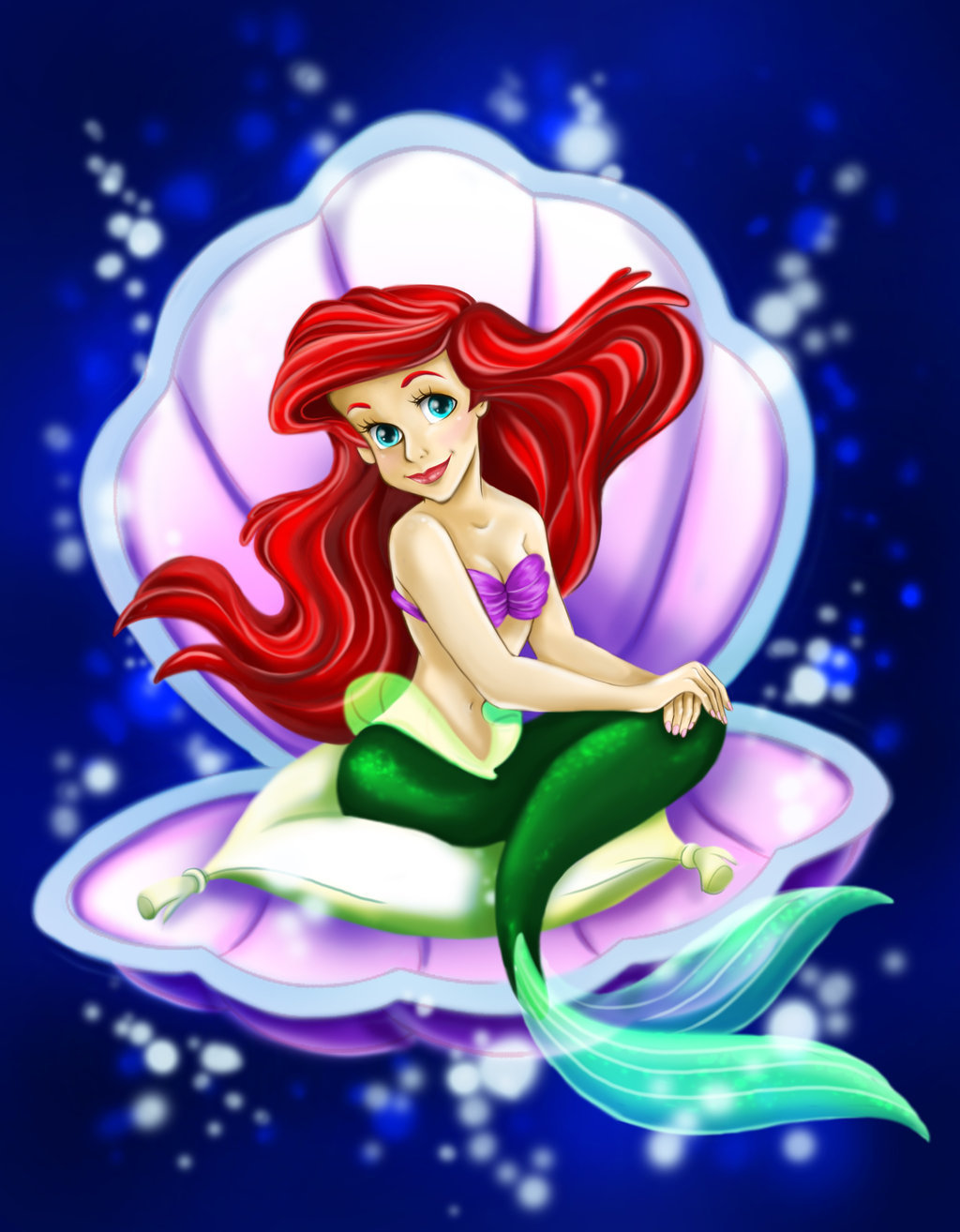
This is perhaps the most iconic picture of Ariel:


and this is my most favourite scene in the whole movie:

Part of Your World


Another reason why I decided to use the Little Mermaid is my chosen theme. I chose transformation and the Little Mermaid is a story about how a mermaid is transformed into a human girl to go on shore and find the prince she loves (the usual Disney recycled plot). The evil witch, also half octopus, transforms herself into a human to stop Ariel from meeting the prince.

I have now changed my idea for my final concept completely but I feel more confident in the idea I have now. In my next blog I will be showing you my final sketch.

Wikipedia, the free encyclopedia. 2013. Disney Renaissance. [ONLINE] Available at: http://en.wikipedia.org/wiki/Disney_Renaissance. [Accessed 11 January 2013].

 Disney, W. (1989) Ariel in a seashell. [image online] Available at: http://images5.fanpop.com/image/photos/30300000/ariel-little-mermaid-msyugioh123-30356694-1024-1314.jpg  [Accessed: 11th January 2013].
RainybopStarWars, 2007. Part of Your World (English). [video online] Available at: http://www.youtube.com/watch?v=cS8C92Yi7Zo [Accessed: 11th January 2013]

Concept Idea No. 2

After some time thinking about my final concept piece, I went back to my last development and changed it a bit. This is how it looks now.


It's A Strange World.
 I prefer it to the first one seeing as the De Stijl 'window' didn't turn out as I had originally intended. In the original movie screenshot the moon and Jack Skellington were the focus of the picture. After my initial changes it was the wave that pulled the most focus. After the new changes, it is once again the moon and skeleton that pull focus.

Also the colourful moon make the view seem stranger and creepier than it really is. I'm still not convinced that this will be my final concept however I think I have finally settled on one combination of art, design and film.


References:
Since the above artwork is a change of an already original idea I had, i did not feel the need to add any references in this blog. 

Concept Idea No. 1

Looking Through the Window (Climbing The Waves)
This is a personal response to the three aspects which I chose. I took a scene from the movie where Jack Skellington (the protagonist of the movie) is climbing the movie’s iconic swirly hill (seen in y last blog) and set that picture as the background of my development.  Next I took ‘The Great Wave’ and inverted it horizontally to get roughly the same shape of the hill in the movie. I digitally copied the inverted wave 5 times to completely cover the foreground of the hill and the cemetery on the movie still. I then placed these five copies as best I could to cover the foreground and still let it look natural.
I blended the ends of each layer together to make it look more whole rather than placed and pieced together. I would have liked to cut out the boats on the wave however when I tried that the wave didn’t look as natural and menacing as it had before. I was very pleased with the final result of this step and would have liked for it to be the very end result, however seeing as I still needed to incorporate design into the piece I took one final step. I took a copy of Piet Mondrian’s ‘Composition II in Red, Blue and Yellow’ and placed it foremost on the picture so that it completely covered the picture of the man climbing the waves. I turned on the Overlay option for this layer and played with the opacity until I was happy with the final look. I did this to make it look like a Chinese screen window with a light in front of it therefore making it more see-through than a screen would usually be. (This aspect was inspired from a scene from the movie Mulan after having watched it last week).
I could have decided to say it was stained glass however I decided to keep the aspect of oriental culture (woodblock printing as very popular in Japan and the great wave is made using this technique) and say that it was a Chinese coloured screen window instead. Even though it wasn’t my first choice for the finished piece I am quite pleased with the end result – had I not needed to incorporate all three areas I would have left out the De Stijl composition and let it be just a man walking on a monstrous wave rather than the same thing being seen through a window.
Although I know this will definitely not be my final concept – I feel that I’m on the right track when it comes to combining the three elements.

References:
These are the pictures I used to create my final piece:

Mondrian, P. (1930) Composition II in Red, Blue and Yellow. [image online] Available at: http://www.pasunautre.com/2010/12/22/de-stijl-here-neoplasticism-and-the-20th-century/  [Accessed: 15th December 2012].

The Nightmare Before Christmas

Since our final piece has to incorporate art, design and film all together, and I already had design and art down I was looking for a film to inspire me to actually do something based on one of the characters etc. I was stuck until my sister came into the room and started singing (ironically) ‘This is Halloween’ from The Nightmare Before Christmas.  I had finally found my movie and then I started looking up images from the movie (Thanks to my good friend, Google). Obviously the first image to come up was this:


And immediately I thought of ‘The Great Wave’ which is what made me think – this little fact might just make my merging the three together slightly more simple (I still have no idea what I’m gonna do but, this should only help me more). I might just have another Eureka moment at 4 a.m. – hopefully not but the greatest ideas do start off at the worst times.

References:

Burton, T. (1993) The Nightmare Before Christmas. [image online] Available at: http://www.wallchan.com/images/thumbs/6988.jpg [Accessed 10th December 2012]

Guinness Surfer Ad


I found this video on Youtube as I was searching for wave scenes to tie in with the two artworks in my last two blogs and I found this one – I feel it incorporates them both very well – especially the second one.

Guinness Surfer Ad.
 

Guinness has always been known for its iconic advertisements – and this was an award winning one back in 1998. It was part of the “Good things come to those who wait” campaign during that year. It shows that a surfer waiting for the perfect wave and a person waiting for the perfect pint of Guinness are the same. The anticipation and feeling of reward are the same. One could argue that they are depicting the perfect pint of Guinness as a natural occurrence like a wave and just as frothy. I don’t know how this could be helpful in my design for my final concept but I just thought it was a really good adaptation of ‘The Great Wave off Kanagawa’ and ‘The Horses of Neptune’ from two static images to two moving ones.

References:

Alltmor, 2008. Guinness Surfer Ad (with Horses) 1998. [Video online] Available at: http://www.youtube.com/watch?v=Y9znA_dwjHw [Accessed 8th December 2012]


Saturday, 17 November 2012

Transformation in The Batman Films


The character of Batman (originally a comic book character created by Bob Kane and Bill Finger) has seen an enormous transformation from animated series to movies and each one has a huge difference to its predecessor.

The first Batman appearance in film was in the 1943 serial film entitled “Batman” which contained 15 chapters. This serial film was also the first appearance of “The Bat’s Cave” (later changed to “The Batcave” for the comics) and the Grandfather Clock entrance to the cave. One of the first transformations is the description of Alfred, Bruce Wayne’s (The Batman) butler.  In the original comics before the serial Alfred is portrayed as an overweight, clean-shaven man while in the serial, he is portrayed by William Austin as an older gentleman with a slim figure and a thin moustache. The Alfred in the comics was later changed to match that introduced in the serial.

In 1966 Batman made his first big screen appearance in colour in “Batman: The Movie”. A new concept was introduced in this movie, which was that of introducing more than one villain in each movie. Whereas in the previous movies the writers introduced an original evil character for each movie, in this new movie, the writers decided to work with characters already introduced to the readers of the comic books and write a plot where four characters could feature rather than just one, these four characters were: The Joker, The Riddler, Penguin and Catwoman.

In 1989, the Batman character was given to director Tim Burton and actor Michael Keaton to makeover as their own. As is Burton’s style this new movie was darker when compared to the others before. It also included, what today is arguably the second best portrayal of the Joker by none other than Jack Nicholson. Three years later, a sequel was released, again directed by Tim Burton and starring Michael Keaton in the lead role. Again, in this movie, two villains roles are written instead of the usual one, again the two characters portrayed are Penguin played by Danny DeVito and Catwoman by Michelle Pfeiffer (perhaps the most notable portrayal of Catwomanto date.) Again, rather than just focusing on the villains’ ‘evil plots’ for the duration of the movie, in this film Burton introduces the creation of both villains and their transformation from two seemingly normal law-abiding citizens to two of the strongest adversaries that Batman faces.

In 1995, Joel Schumacher replaced Tim Burton as director as Warner Brothers decided that the Batman series needed to take a new direction, Michael Keaton didn’t like the direction that his character was taking and backed out of the film to be replaced by Val Kilmer. Chris O’Donell was the new Robin, giving ‘The Boy Wonder a new physical look – as opposed to the early portrayals of Robin as a very slim, clean cut, sleek very young (9-12 year old) boy (also known as the Teddy Boy look) he is now portrayed as a muscular, older (he now appears to be at least 19) rebellious young man with very little hair (as was the style at the time) and ear piercings. In 1997, an interesting addition in this adaptation was the introduction of Batgirl, who, prior to this movie, had never made it into the movies.

And now we come to the most recent Batman series: the so called “Christopher Nolan Series”.

In Batman Begins, the director finally depicts the ‘birth’ of the vigilante as well as includes one of the biggest villains ever introduced in the comics (but never in the movies): Ra’s Al Ghul (Liam Neeson) who plays a key role in the creation of the Batman. In the movie, Nolan also includes another notable evil character in the comics who also never made it to the big screen: Scarecrow. Through the introduction of Bruce Wayne’s history (which had never really been given importance in the movies) the character finally has a certain depth to it which makes him more relatable – the personal anguish and grief which the character goes through makes him seem more realistic (as was Bob Kane and Bill Finger’s original intention in creating a superhero whose only powers were intelligence, experience, and physical strength which is gained through a healthy lifestyle and training, making him the ideal role model for the young readers of the comics). The movies now take on an even darker approach than those directed by Tim Burton, however where Burton’s movies looked more cartoonish because of that darkness, here, they make it more real because Nolan decides to portray the impoverished part of Gotham as well as corruption in the Police force and legal system of the city showing Batman as a fighter of ‘real’ crimes.

The sequel to ‘Batman Begins’ is perhaps most known for Heath Ledger’s portrayal of the ‘Joker’ which some call the most realistic portrayal of the character. No doubt playing a character which had been played time and time again by different actors, each of them bringing a different kind of insanity to the character was no easy feat for Ledger, however it is very obvious to whoever has seen ‘The Dark Knight’ will agree that he did the creators proud in his portrayal of the character. ‘The Dark Knight’ is also known for the return of Harvey ‘Two-Face’ Dent to the movies. One who has seen both ‘Batman Forever’ (1995) and ‘The Dark Knight’ can see that the difference between Tommy Lee Jones’ Two Face and Aaron Eckhart’s is vast – including the back story and creation of the evil inside Harvey Dent. One other very important facet of this movie is the fall of the Batman – finally showing to the audience that at the end of the day the Batman is Bruce Wayne who is nothing more than a man who is still susceptible to pain and grief just like any other man.

The latest Batman film starts off with Bruce Wayne as a recluse after taking the blame for Harvey Dent’s death, while hosting a party at his house (one which he does not attend himself) he meets Selina Kyle a.k.a. Catwoman. Here, one can see the enormous difference between Anne Hathaway’s Catwoman and that portrayed by Michelle Pfeiffer. In this movie Catwoman is portrayed more as a Robin Hood-esque character, whereas in 1992 Michelle Pfeiffer played a wronged woman who was almost killed by her boss and her only motivation as Catwoman is the protection of women everywhere and her revenge on men especially her boss. Another very, very important transformation is that of Bane. In 1995 he was portrayed as nothing more than Poison Ivy’s ‘henchman’ while in the comics he was supposed to be Batman’s intellectual equal while being stronger than him, this was done very well in ‘The Dark Knight Rises’ most especially when it seems like Bane has defeated Batman for good and in one instance the actions of the film all lead the audience to conclude that Batman is dead.

The final instalment of the Batman movies is perhaps the biggest transformation from the archetypical superhero movie because of the fact that it actually makes the audience really believe that Bruce Wayne is actually dead (with his Last Will and Testament being read). The movies previous to the Nolan series all seem to follow the usual format of superhero movies with the hero defeating the villains over and over again and the villain finally getting one over the hero by kidnapping his love interest or his crime-fighting partner and asking him to choose between saving them or the people of the city and somehow, miraculously the hero manages to do both “and they live happily ever after”.

Christopher Nolan really takes this concept and turns it around giving the audience what they really want and what they are not expecting at the same time. I think this is the number one reason why Christopher Nolan’s depiction of the Batman stories is the most popular one (apart from also being the most recent and realistic)


References:

Wikipedia. Batman in Film, last modified:12th August 2012. http://en.wikipedia.org/wiki/Batman_in_film(page accessed 16/11/12)